
Every administration presents a mixed record of achievements and failures, and every president attracts criticism. What distinguishes the Tinubu administration, however, is the apparent willingness to undermine its own public image with minimal external assistance.
In theory, the administration can point to several policy shifts of considerable magnitude: the removal of fuel subsidy, unification of exchange rates, the introduction of student loans, and increased allocations to infrastructure projects involving roads and rail. Supporters insist that previous governments avoided these measures because of political risk. That argument may have merit. It also raises the question of whether adequate risk analysis preceded implementation. Had such analysis been conducted with due diligence, it is reasonable to assume that the administration would have anticipated the volume of public criticism now directed at these policies.
Nigeria, however, is not governed by theoretical models or retrospective assessments by historians. It is governed by a population of approximately 220 million people whose daily preoccupation is access to food and basic survival. In that empirical reality, negative public perception has a corrosive effect on policy effectiveness, irrespective of the technical merit of the policies themselves. That perception follows a predictable trajectory: it begins as pity, escalates into anger, and ultimately manifests as ridicule across social media platforms.
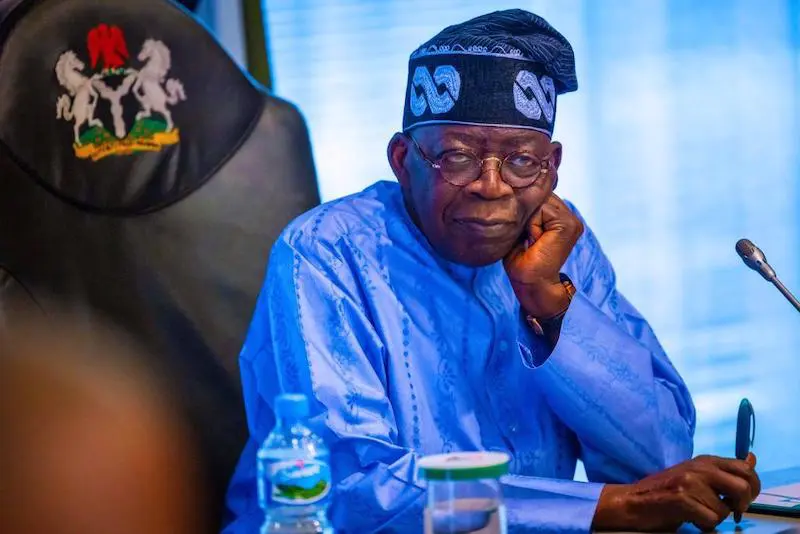
An examination of discourse across digital and traditional media reveals that the central theme is not policy reform. The dominant theme is arrogance. This perception extends beyond the president to include members of his immediate family and senior officials, but it is most pronounced in the person of President Tinubu himself. It is evident in his demeanor, which conveys the impression of a man who has encountered every circumstance and therefore owes no explanation to the electorate. It is evident in his rhetorical style, characterized by abrupt humor and sarcastic remarks that resemble a schoolmaster addressing uncooperative pupils. It is most evident in the deficit of empathy: at a time when food prices have increased threefold, petrol sells at approximately 1370 naira per litre, and insecurity remains unresolved, official communication from the presidency frequently adopts a tone that can only be described as clinical detachment.
The situation deteriorated further with recent public statements attributed to the president, specifically the claims that cabals seek his death and that many Nigerians desire his demise. With all due respect, Mr. President, these pronouncements do not constitute prophecy. They represent the logical outcome of three years of leadership that has demonstrated limited sensitivity to public sentiment. When a leader adopts an posture of self-sufficiency, disregards the material conditions of citizens, appears emotionally distant, and surrounds himself with individuals who respond with applause to the most trivial utterances, the public does not interpret subsequent complaints of persecution as credible. The public interprets them as consequences of conduct.
It is difficult to maintain coherence in public engagements over an extended period and then express surprise when questions arise regarding capacity. It is similarly difficult to adopt a paternalistic posture toward the citizenry and then respond with declarations of victimhood when approval diminishes. That is not governance. That is self-pity amplified through official channels. The conclusion is unavoidable: perception is not merely outperforming policy; it is pursuing policy with the intent to destroy it.
The communications apparatus of the administration has failed in its fundamental responsibility. That assessment is offered without equivocation. Competent aides understand the distinction between factual accuracy and rhetorical insensitivity. They understand the difference between firmness and recklessness. They understand the difference between shielding the principal and isolating him from reality. The current team appears to have selected the latter option, even when the consequences were visible to the general public. The analogy of the emperor parading without garments, convinced of his magnificent attire, is difficult to avoid.
Errors in public presentation are permitted to circulate without correction. Official events are transformed into sources of viral content for reasons unrelated to policy substance. Instead of providing a coherent explanation of how the pain associated with reforms will be resolved, the administration offers turgid press releases, underdeveloped talking points, and surrogates whose primary function appears to be the disparagement of critics and the celebration of the principal.
The sycophantic element surrounding the presidency constitutes a more serious problem. A closed circle has been established in which affirmation is the only acceptable response. No one informs the president when his remarks lack warmth. No one intervenes when his comments on national television suggest paranoia. No one advises him that assertions regarding assassination attempts, absent substantiating evidence, undermine authority rather than enhance it. The result is predictable. He makes the statement, and the public responds with skepticism.
Leaders who have implemented painful economic reforms in other jurisdictions have generally done so with an acknowledgment of public hardship. Their message has been consistent: this will cause difficulty, I recognize that, and this is the plan for recovery. The Tinubu administration, by contrast, provides statistical data, engages in personal attacks on critics, and now introduces allegations of lethal conspiracies. That approach does not persuade citizens. It alienates them.
Nigerians will accept economic sacrifice if they are convinced that their leaders share the burden. They will reject the same sacrifice if it is communicated from the security of an armored vehicle by individuals who insist that food prices have declined.
Reforms may produce positive outcomes at some future point. If those outcomes cannot be explained in terms accessible to the public, they will remain invisible. A president who projects arrogance, detachment, limited capacity, and now paranoia will not receive credit for achievements, even when such credit is warranted.
The repeated assertion that cabals and many Nigerians seek the president’s death does not function as a warning to the public. It functions as an admission of lost control. It indicates that the message has been lost and that the connection with the people has been lost.
The administration has failed to fulfill its basic obligations to Nigerian citizens. Basic obligations include affordable food, safe roads, reliable electricity, and personal security. On each of these metrics, the condition of millions of Nigerians has deteriorated since 2023. That constitutes failure, regardless of the quantity of statistical data presented to the contrary.
For that reason, the president should not be granted an additional term beyond 2027. The aspiration to be remembered as Nigeria’s most courageous reformer is, at best, an exercise in self-congratulation. Courage without measurable benefit to the population is indistinguishable from noise.
History provides numerous examples of leaders who followed a similar trajectory. They favored bold initiatives, rejected criticism, surrounded themselves with flatterers, and assumed that history would judge them favorably. History did not.
King Louis XVI of France maintained an attitude of detachment while his subjects experienced hunger. He disregarded their suffering and relied exclusively on courtiers who confirmed his assumptions. His reign ended at the guillotine, and historical memory records him as a monarch who lost contact with his people.
Emperor Nero of Rome favored theatrical pronouncements and attributed his failures to enemies. He performed while the city burned, both literally and metaphorically. History does not remember him as a constructor of institutions. It remembers him as a cautionary tale.
Idi Amin of Uganda cultivated a reputation for dramatic rhetoric concerning enemies. He adopted the title of Conqueror. He was eventually removed from power, and historical records emphasize disorder rather than statesmanship.
Robert Mugabe of Zimbabwe initiated significant economic policies in his early years and demanded public acclaim. When those policies produced negative consequences, he attributed the outcome to enemies and saboteurs. Contemporary assessments associate his name more closely with economic collapse than with national liberation.
Nicolas Maduro of Venezuela likewise maintained that assassination attempts were imminent while the national economy contracted and citizens experienced hunger. The international community now recalls his repetitive slogans more readily than his policy agenda.
Bold initiatives have no value if the population is experiencing deprivation. History does not reward volume. History records outcomes.
President Tinubu does not require universal approval to govern. He requires public comprehension in order to lead. At present, his aides have failed, his flatterers have succeeded, and his own statements are causing the greatest damage.
The phrase “cabals want me dead. Nigerians want me dead” will persist longer than any economic indicator. In Nigerian politics, perception determines the initial historical account. That account, in the present case, resembles a poorly executed drama.
If there is no change in approach, President Tinubu will not be remembered primarily for the removal of subsidy or the unification of exchange rates. He will be remembered as a president who demonstrated the resolve to alter policy and the arrogance to lose the confidence of the people in the process. He will be remembered as a leader who mistook fear and flattery for strategy.
Mr. President, it is time to dispense with the chorus of uncritical approval and reintroduce competent advisors into decision-making processes.
Olu Adekunle is a Public Policy Analyst/ Public Affairs Commentator and he writes from Abuja.