

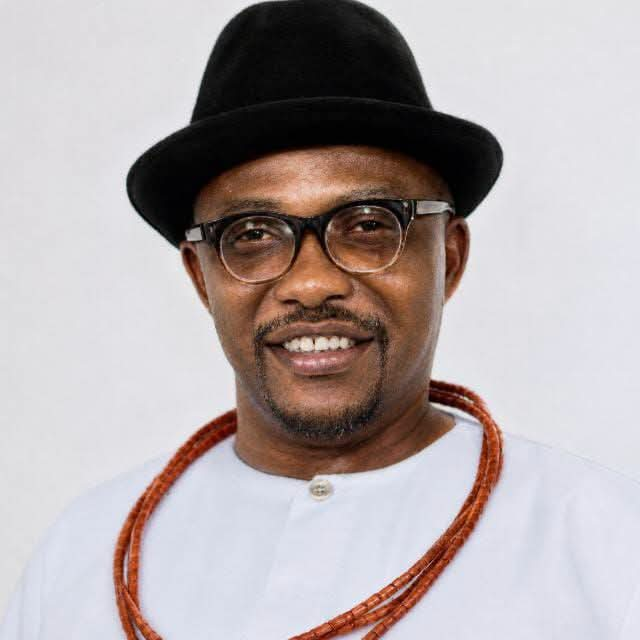
By Foster Akpore
Today, August 4, 2026, Chief Demas Onoliobakpovba Akpore would have turned 98. There will be no cake, no gathering to mark the day with him in the room — he passed on December 28, 1993, at just 65 — only a school still standing where he built it, a state he helped birth, and a debt of honour that Delta State has yet to fully pay.
He was a nationalist. An educationist. An advocate for social justice whose ideas helped shape the intellectual and civic landscape of Delta State long before it bore that name. With bachelor’s and master’s degrees in Classics in hand by 1958, he had every road to comfort open to him. He chose Orogun instead — a community with no electricity, no potable water, no access roads — and there he founded Orogun Grammar School, serving as its founder, principal, and teacher.
But his greatest sacrifices were political, not just personal. As a member of the Unity Party of Nigeria executive in Bendel State, he fought for a state university to be sited in the Delta area, anchored by an upgraded College of Education, Abraka. When power brokers offered him private deals to look the other way, he refused them — and watched his own supporters turn against him. Isolated in council, he lost that fight. Abraka lost the university. Ekpoma gained it.
In 1981, he stood again on principle, backing the creation of Delta State itself against his own party’s position, and paid for it with political persecution, forced or voluntary resignation, and a bitter contest against the very leader he once stood beside. It broke his political stride. The final years of his public life lived in that shadow.
Even after all of this, there was an attempt to make it right. A resolution passed by the Delta State House of Assembly to name the Delta State University, Abraka library after him. It was never carried out.
And yet, he was never allowed to be forgotten — because he never lived a life that could be contained to one generation. For nearly two decades now, the Ejiro & Otive Igbuzor Foundation has kept his memory alive through the Chief Demas Akpore Memorial Lecture Series, and through the book it published, The Life, Ideas and Contributions of Chief Demas Akpore. Earlier this year, that mission reached its fullest expression yet: copies of the book were carried to every higher institution of learning across Delta State — from the riverine communities in Delta South to Delta North and Delta Central, sparing neither private nor public institutions. No campus was left out. No terrain was too difficult to reach.
But the Foundation does not carry that memory alone. His children, grandchildren, and great-grandchildren carry it in their blood. The students he taught and shaped at Government College, Ughelli, and at Orogun Grammar School — the very institution he built with his own hands — carry it in the standards they hold themselves to. Men like Dr. Otive Igbuzor, who crossed his path and left it forever marked by what he witnessed, carry it forward into the institutions they now build in his image. And countless others — those he mentored quietly, those he replicated himself in without ever seeking credit for it — carry a piece of him into rooms he will never enter, decisions he will never make, and lives he will never meet. This is what a life of true conviction leaves behind: not a monument, but a multiplication.
I count myself among those who carry that inheritance. As someone who bears the Akpore surname, I have walked through doors that opened simply because a pathfinder and torchbearer went before me and made that name mean something. His name has done work I did not have to do myself. That is not a small thing, and it is not something I take lightly.
This is what makes his life worth revisiting now, of all times. We live in an era where principle is too often the first thing traded away — where conviction bends the moment filthy lucre is placed on the table, and where “everyone has a price” is treated less as a warning than as common sense. Chief Demas Akpore is proof that it does not have to be this way. He had a price offered to him, more than once, and he refused it, even when refusing cost him his political future. That is precisely the kind of example Delta State — and Nigeria — needs more of today, not less.
But memory sustained by family, students, and foundations is not the same as memory secured by the state he helped build. Today, on what would have been his 98th birthday, this is a renewed call to the Delta State Government: honour the resolutions already made in his name. Name the library or any other infrastructure that befits his stature and sacrifices. Immortalize the man who chose principle over comfort, and community over personal survival, again and again, until it cost him everything.
Rest in power, Chief Demas Onoliobakpovba Akpore. Delta State owes you more than memory — it owes you the honour it already promised.