

By Emmanuel Orjih

Every time I watch the movie Titanic, I find tears in my eyes. As I begin to write this, I feel the same weight and the same tears. Not because I am watching Titanic, but because I am watching another movie.

This one is reality TV.
On my screen, human beings are escaping extreme poverty across the world. Every figure that runs across the screen represents one person escaping extreme poverty. Each carries a national flag above their head as they run. In the one hour I have watched this reality TV, I have seen the flag of Yemen. I have seen the flag of Sudan. I have seen the flag of Congo. I have seen the flag of Pakistan. I have seen the flag of Bangladesh. I have seen the flag of Tanzania. I have even seen the flag of Burundi.
But I have not seen the flag of Nigeria. Not once.
You can watch it too at worldpoverty.io. Let me know when you see Nigeria.
According to the World Poverty Clock, as at today the 9th of January 2026, 73,099,724 (73.1 million) Nigerians, almost one third of the entire country, are trapped in extreme poverty. At 31 percent, this is the worst extreme poverty rate on Earth. To escape poverty, Nigeria should be lifting 31 people out of extreme poverty every single minute. Instead, every single minute, 2.25 new Nigerians fall into extreme poverty.
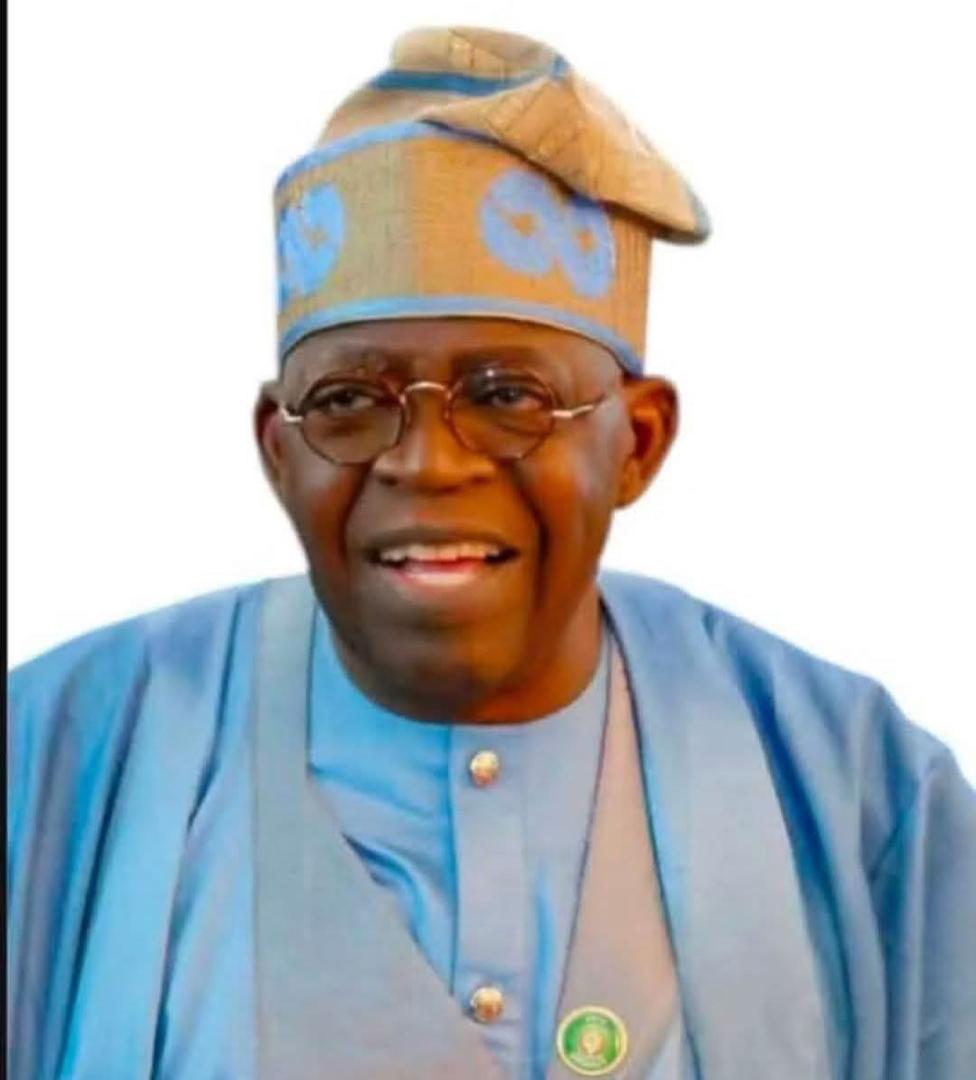
This is a response. And it is directed at Nigeria’s Presidential Villa, State House Abuja, which speaking through Tanimu Yakubu, Director General of the Budget Office, issued an official rejoinder dated January 8 titled “A Rejoinder to Bola’s Tax: When Simple Logic Becomes Simple Misdirection.” Their rejoinder was a response to my own essay dated January 5 titled “Will the Poor Pay Bola’s Tax.”
Nigeria now holds an unenviable position on Earth. It is the world’s worst country in net poverty escape. Basically, when it comes to measuring which countries poverty is growing faster than it is being escaped, Nigeria is no. 1 on earth. These statistics represent real human beings. Tens of millions of Nigerians are standing still, suffering inside extreme poverty, while the rest of the world runs past them out of poverty.
Nigerians may disagree about what this administration led by President Bola Ahmed Tinubu has delivered to them, but the statistics agree on one thing:
The Tinubu administration has created the fastest poverty factory on Earth today, producing extreme poverty at unmatched scale and speed. It is on top of this grim reality that they now plan to construct Bola’s Tax, a tax that reaches people who already fall into the category of extremely poor people.
According to the World Bank, Nigeria has recorded the largest increase in the number of poor people in the world since 2019. No country in the last six years has added more poor people to Earth than Nigeria has. In other words, Nigeria’s single largest contribution to the world in this period has been poor people. Nigeria comes first in the production of poor people. One out of every twelve extremely poor human beings alive today is Nigerian.
The World Bank says 139 million Nigerians live in poverty. PwC projects that 141 million Nigerians will be in poverty in 2026. Bloomberg reports 139 million Nigerians in poverty. The National Bureau of Statistics and UNDP report that 133 million Nigerians are multidimensionally poor.
The World Bank is the world’s leading authority on poverty measurement. PwC is one of the Big Four global auditing firms that audit economies and warn governments when systems are failing. Bloomberg is the world’s most trusted financial and economic data platform. The World Poverty Clock is a real time poverty tracker built by World Data Lab in partnership with Brookings and cited by global policymakers. UNDP is the United Nations’ official development and poverty agency. The National Bureau of Statistics is Nigeria’s own official statistics authority.
These are credible institutions. Their numbers all point in the same direction. A direction far more consistent with Nigeria being the poverty capital of the world than with Mr Yakubu’s postulations and protestations. His position relies heavily on technicalities such as purchasing power parity, concepts that fewer than half of one percent of the population whose budget he governs will understand. In the real world where people like Joseph and I live, we have learned that when senior officials deploy such technical language, it is often because reality is being obscured rather than clarified.
My essay was not about technicalities.
A. It was about whether Nigeria should be bringing poor and extremely poor people into the tax bracket at all, at this moment, and under these conditions.
B. It was about whether 143 million people already paying very high implicit taxes through corruption, incompetence, inflation, and weak administrative systems should be made to pay any more.
C. It was about whether it is not akin to national economic suicide to crush demand by taxing the poor in an economy of collapsing real wages, mass unemployment, a vast informal sector, and extreme poverty.
D. It was also about whether monies collected from millions of poor people would actually be used to finance anything that positively affects those same poor people.
Much as Mr Yakubu’s rejoinder was poor in addressing these human questions in simple and understandable language, it was unusually rich in two respects. First, it was rich in technical jargon. Second, it contained a rare public admission by a senior member of this administration that Joseph, who earns N75,000 a month and whom the World Poverty Clock classifies as extremely poor, will in fact pay Bola’s Tax.
1. Mr Yakubu clearly and openly stated, after his own computation process, in official communication delivered via the official media platform of the Presidential Villa at statehouse.gov.ng, that Joseph will pay N350 in tax. For those who had believed government’s repeated denials, this is the proof. Nigerians are now witnesses to a formal admission that the poor, including the extremely poor like Joseph, will pay Bola’s Tax.
2. I suspect that N350 appears negligible to Mr Yakubu and his ilk. For people in his position, it is inconsequential. It is not inconsequential to tens of millions of Nigerians. Permit me to introduce Mary. This is a true story from Gwagwalada in the Federal Capital Territory. Mary, a nineteen year old village girl, needed urgent money. Unable to get help from her family, she decided to obtain it from a man. She negotiated with an okada rider and agreed on N500. After the sexual act, the man either refused or was unable to pay. Mary insisted. A scuffle followed. A dagger was drawn. Mary died later that day. I knew Mary. Her mother was a member of a cooperative supported by my accelerator. One Nigerian gave her body for N500. Another Nigerian killed for N500. Yet our leaders treat N350 as nothing. A disconnect. This is what happens when power loses sight of the poor
3. Mr Yakubu goes on to list five items he calls my deceptions. Reading his response, it is evident that it was written with artificial intelligence. As an AI researcher, the signs are clear. His AI, without proper human guidance, jumped to conclusions it should not have, particularly in what he labelled Deceptions One and Two.
4. In what he calls Deception One, he claims I described pension or health insurance contributions as taxes. That is false. What I showed was that even after all deductions are applied, Joseph still ends up within the tax bracket. Once the poor enter the tax bracket, the debate is no longer about definitions. It becomes about direction. Are we taxing surplus or taxing subsistence. Mr Yakubu’s own admission that Joseph will pay tax answers that question conclusively.
5. In Deception Two, Mr Yakubu claims I ignored the 0% tax band. I did not. I demonstrated that after pension deductions and the 0% band, Joseph is still taxed on a residual amount. Mr Yakubu’s numbers align with this reality, but his written logic does not. This is consistent with what the AI industry refers to as “hallucination” and “confabulation” of AI. Mr Yakubu is an unwitting participant.
6. In Deception Three, Mr Yakubu argues that the World Bank’s poverty line is measured in purchasing power parity (PPP) and should not be converted directly into naira. Technically, that is correct. Practically, it misses lived reality entirely. Nigerians do not buy food in PPP. They do not pay transport, rent, or school fees in PPP. They experience poverty in naira. When inflation rises, it rises in naira. When wages stagnate, they stagnate in naira. If a Nigerian earning N75,000 a month cannot afford food, transport, and basic dignity, no theoretical PPP adjustment changes that lived fact.
7. In Deception Four, Mr Yakubu argues that widening the tax base does not necessarily mean taxing the poor. In theory, this may be correct. In Nigeria’s reality, where wealth is informal, enforcement is weak, elites evade easily, and poverty is widespread, expansion always reaches downward first. Nigeria’s poor are visible, reachable, and coercible. That is why the burden falls on them. And that is also why we (StopThisTax.org) are stepping up and forward to ensure that the poor will not be easy pickings this time around.
8. In Deception Five, Mr Yakubu suggests that listing past misuse of public funds is emotional rather than analytical. It is not. Policy is judged against antecedents. If money has been collected before and lives did not improve, the burden of proof rests with government, not with the poor, to explain why this time will be different.
9. My essay ended with a simple question. If government has collected money before and the poor did not feel the benefit, why should the poor trust this one. Mr Yakubu never answered that question. He addressed tax mechanics when the question was legitimacy.
Still, he opened a door. And I intend to step through it.
Mr Yakubu wrote, “If your target is accountability, the rational conclusion is to ring fence, publish, and audit collections.”
On this, we are in complete agreement.
Therefore, on behalf of 143 million poor Nigerians, including 73 million extremely poor Nigerians like Joseph, I urge the administration of President Bola Ahmed Tinubu to step up to its own words. Institute open governance. Institute full transparency. Institute strict public accountability for every naira collected from every poor person in Nigeria in the name of Tax.
Prove to Nigerians and to the watching world that you are not planning to use the N350 collected from 143 million poor Josephs every month to fund unlawful offices, including the office of the First Lady and the office of the First Son.
Over to you, President Bola Ahmed Tinubu.
In the meantime, if you are Nigerian, and you want to protect yourself from Bola’s Tax, visit: StopThisTax.org
Yours in Service.
Emmanuel Orjih
The Steward, Stop This Tax
StopThisTax.org | emmanuel@StopThisTax.org