

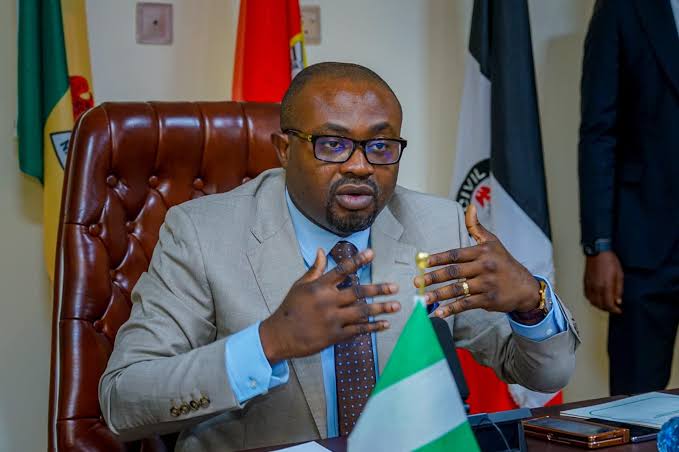
By Babatunde Ogundare

The story of reform is often written not in comfort, but in the courage to question, to investigate, and to rebuild. The recent stakeholders’ engagement on the final report of the Independent Investigative Panel on alleged corruption, abuse of power, torture, and other inhumane practices within the Nigerian Correctional Service (NCoS) stands as one such defining moment. It is a testament to a nation willing to look inward and confront difficult truths.

More importantly, it signals a system determined to emerge stronger, fairer, and more accountable.
Constituted in November 2024 by the Honourable Minister of Interior, Dr. Olubunmi Tunji-Ojo, the panel came at a time when public trust required urgent reassurance. The allegations brought forward by Mr. Idris Okuneye Olarenwaju, popularly known as Bobrisky, stirred national discourse and demanded institutional clarity.
Rather than dismiss or deflect, the Honourable Minister chose the path of transparency. In doing so, he laid the foundation for what may well become a watershed moment in the reform of the Nigerian Correctional Service.
At the helm of this critical assignment was the Permanent Secretary of the Ministry of Interior, Dr. Magdalene Ajani, whose leadership proved both steady and inspiring. With remarkable diligence and meticulousness, she guided the panel through complex testimonies, sensitive findings, and diverse stakeholder perspectives. Her commitment to thoroughness ensured that no issue was glossed over and no voice left unheard. She did not merely chair the panel; she stewarded a process of truth.
The stakeholders’ engagement itself reflected a truly national and inclusive character. Notably, the Attorneys General of all the states of the Federation as well as member from civil organisations and professional bodies such as the Nigerian Bar Association (NBA) and Nigerian Medical Association (NMA) were represented, underscoring the shared responsibility of criminal justice administration across federal and sub-national levels on one hand, and government and private organisation on the other hand. Their presence signified a collective acknowledgment that correctional reform is not the burden of the Federal Government alone, but a joint obligation requiring coordinated action.
The panel itself reflected a commendable blend of expertise and representation. Members drawn from government institutions and civil society brought depth, independence, and credibility to the proceedings. Their contributions enriched deliberations and strengthened outcomes. Other key officials ensured that institutional knowledge and policy alignment remained central. Together, they formed a team that was not only competent but deeply committed—demonstrating the power of synergy in governance.
The panel’s work extended far beyond theory and paperwork; it reached into the very heart of correctional realities. By visiting over 72 correctional facilities across 22 states, the panel bore witness firsthand to prevailing conditions, practices, and challenges. These visits transformed the exercise into a living inquiry, grounded in evidence and experience. A critical finding that emerged from these visits was the evident infrastructural decay and operational limitations within many correctional facilities. Overcrowding, aging infrastructure, inadequate healthcare facilities, and logistical constraints were recurring themes. These realities underscore the urgent need for intervention—not only by government, but also by civil society organisations and development partners, whose support can catalyse meaningful and sustainable improvements.