
…Explosive Testimony in Washington Targets Nigeria’s Leadership
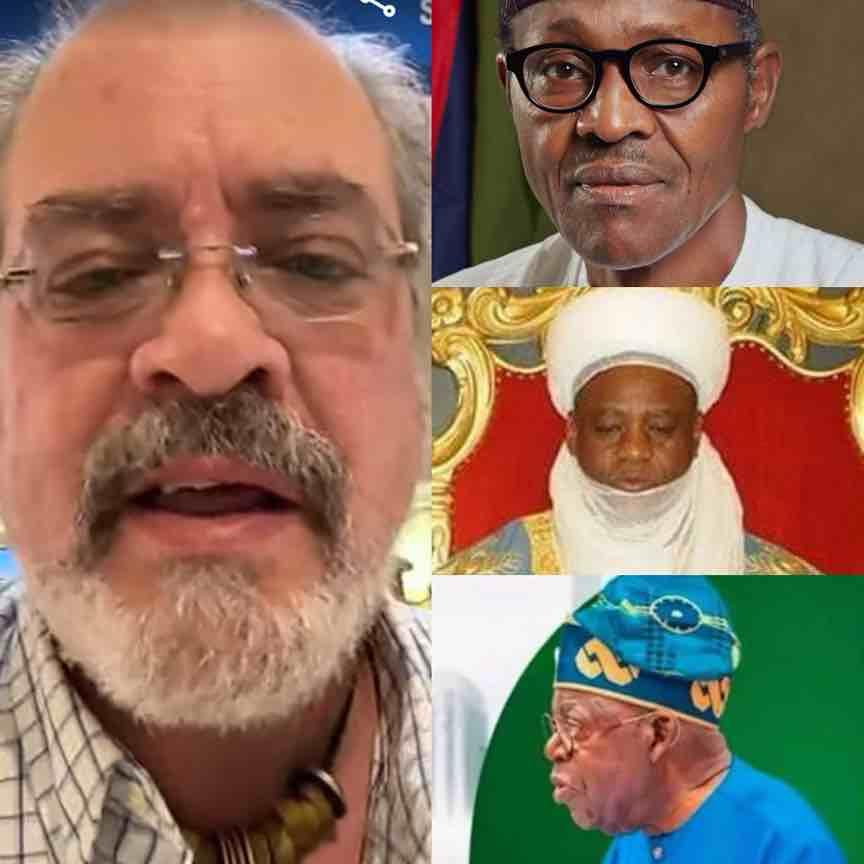
In a stunning and deeply controversial appearance before the U.S. Congress, a former American mayor has delivered one of the most severe public indictments yet of Nigeria’s political and historical trajectory—placing the administration of Bola Ahmed Tinubu under an unforgiving international spotlight.
With unmistakable audacity, he accused not only the current government but also past leadership under Muhammadu Buhari of presiding over policies he claims have fueled widespread violence, particularly against Christian communities in northern Nigeria. He invoked the term “genocide”—a charge that, if substantiated under international law, would carry extraordinary consequences, but which remains strongly disputed.
His testimony did not stop at elected officials. He pointed toward powerful religious and historical institutions, including the office of the Sultan of Sokoto and the legacy of the Sokoto Caliphate, suggesting they have shaped the region’s religious direction in ways critics argue are exclusionary. These claims strike at the core of Nigeria’s fragile religious balance—and are likely to provoke strong rebuttals.
Then came the historical reckoning.
Revisiting the Nigerian Civil War, he alleged that the United Kingdom played a decisive role in enabling the humanitarian catastrophe that followed, including mass starvation in Biafra. While the scale of suffering is widely acknowledged, the attribution of intent and responsibility remains a subject of enduring historical debate.
On present-day tensions, he voiced support for self-determination movements tied to Nnamdi Kanu, criticizing the Nigerian government’s handling of his detention. That position cuts directly into one of Nigeria’s most sensitive political fault lines—national unity versus separatist agitation.
He also referenced longstanding controversies linked to President Tinubu abroad, arguing they raise broader questions about accountability in leadership. These issues have circulated publicly for years, though interpretations remain divided.
The most immediate question now: will this testimony trigger action?
While he suggested that U.S. lawmakers could consider sanctions or other measures, history shows such decisions are rarely swift. Nigeria remains a key strategic partner, and any move by Washington would carry significant geopolitical weight.
Still, the impact of this moment is already clear.
This was not routine criticism—it was a narrative designed to reframe Nigeria’s past and present in the harshest possible terms. Whether it stands as a turning point for international accountability or fades into political rhetoric will depend on one thing: evidence strong enough to move the world from outrage to action.
Credit: Chigozie Ejiogu Facebook Wall.