
By Frank Tietie
As I write, leaders of Okuama, an Urhobo community in Delta State, remain in detention without formal charges nearly two years after their arrest over allegations linking them to the tragic killing of soldiers of the Nigerian Army during the conflict between Okuama (Urhobo) and Okoloba (Ijaw).
In March 2024, Okuama came under a devastating military invasion by federal forces. Homes were razed, women and children displaced, and several men and youths reportedly killed. Community leaders were arrested and have remained in detention to date without trial or formal charges, contrary to the principles of justice and the rule of law.
More disturbing is the fact that no official panel of inquiry has been constituted under the Tribunals of Inquiry Act to establish the truth surrounding the crisis. Equally, no comprehensive compensation or resettlement programme has been initiated by the Federal Government for the victims and displaced persons of Okuama. It is as though the Okuama people are regarded as less deserving of justice, dignity, and national protection than other Nigerians.
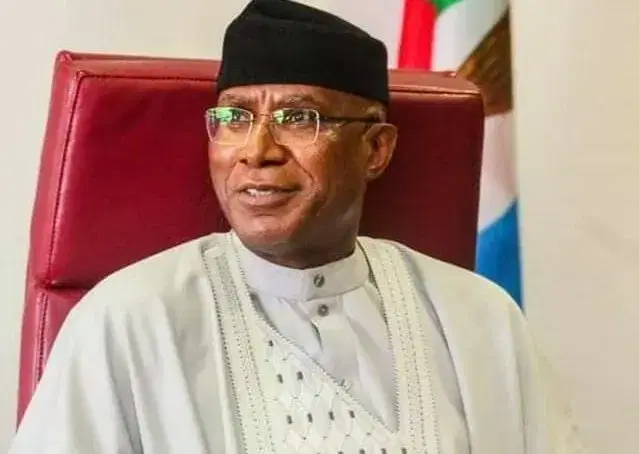
Sadly, the situation is gradually fading into silence due to disunity, weak strategic leadership, and a lack of collective political direction among the Urhobo people. This has significantly diminished Urhobo influence within the Nigerian political space to the extent that they are unable to effectively demand truth, justice, and accountability, even in a matter as grave as the Okuama tragedy. Reflecting on the Okuama situation and how an entire people can be brought to their knees with little national resistance, inevitably brings to mind one man, Senator Ovie Omo-Agege!
For the first time in Nigeria’s history, an Urhobo man attained one of the highest levels of political influence in the country when he became Deputy President of the Senate. Many of us who were once among his fiercest critics during his early years in the Senate later came to appreciate that Nigerian politics is not for the faint-hearted. It rewards only those who are bold, strategic, courageous, and determined enough to define, protect, and pursue the interests of their people with clarity and persistence.
That is precisely why, for forty-five (45) consecutive years, William Wilberforce was repeatedly elected to represent his constituency in Britain because he relentlessly pursued what he and his people considered a strategic moral and political cause which was the abolition of slavery.
Without doubt, if the Distinguished Senator Ovie Omo-Agege were currently representing the Urhobo people in the Senate, the Okuama situation would almost certainly have taken a different and more constructive course on a note.
As Deputy Senate President, Omo-Agege attracted unprecedented human development projects to Delta Central Senatorial District. Predictably, many of those projects were concentrated within his immediate environment, attracting criticism from opponents. Yet, such criticisms often ignore a fundamental truth of Nigerian politics that, without his influence and position, many of those projects would never have come to Urhobo land in the first place. Remember, charity begins at home. If Omo-Agege could deliver such benefits to the Urhobo nation, there is every reason to believe he could do even more for Delta State, the Niger Delta, and Nigeria at large if given greater opportunities.
Beyond competence and political strategy, equity itself demands that Omo-Agege should enjoy the support and confidence of his party, the All Progressives Congress (APC), for another Senate bid.
Before the defection of Governor Sheriff Oborevwori to the APC, Omo-Agege was unquestionably the de facto leader of the party in Delta State, being its highest-ranking political office holder and gubernatorial candidate. Yet, in deference to President Bola Ahmed Tinubu and the national leadership of the APC, Omo-Agege welcomed Governor Oborevwori and his erstwhile PDP supporters into the party and peacefully conceded party leadership in the overall interest of unity and progress.
He did so despite his enormous sacrifices, investments, and goodwill built over the years within the APC at both state and national levels. Since then, he has continued to work harmoniously with the Governor and other party stakeholders. It would therefore be profoundly unfair for Governor Oborevwori and former PDP loyalists who recently joined the APC to undermine Omo-Agege’s aspiration to represent the Urhobo people in the Nigerian Senate once again.
In today’s political climate, leadership choices and the protection of group interests are increasingly defined by pragmatism, influence, strategic thinking, and capacity. The Urhobo people, who constitute the overwhelming majority within Delta Central Senatorial District, must therefore resist the temptation to allow fear, temporary patronage, or the politics of “stomach infrastructure” to determine their political choices. They must instead put forward their best and strongest candidate in pursuit of their collective interest and long-term relevance within Nigeria.
Therefore, without making unnecessary comparisons in the spirit of ‘Urhobo Uvuovo’, it remains my considered opinion that Senator Ovie Omo-Agege stands out as the most strategic and capable choice among the available options to represent the great Urhobo people in the Nigerian Senate.
May the greatness of the Urhobo nation never fade.
May God bless Urhobo land.
May God bless the Federal Republic of Nigeria.
Frank Tietie, Esq., is a Lawyer, Media Personality, and Executive Director,
Citizens Advocacy for Social and Economic Rights. He writes from Asokoro, Abuja.