
By Crusoe Osagie

Crusoe Osagie describes the convergence of Nigerians on the serene grounds of Fairmont Windsor Park in their usual eye-service to President Bola Tinubu during his state visit to the United Kingdom…

On the morning of March 17, 2026, the serene grounds of Fairmont Windsor Park were meant to host another day of quiet luxury. Nestled on the edge of the historic Windsor Great Park, the five-star countryside retreat is designed as a sanctuary—an escape defined by calm gardens, refined architecture, and carefully curated hospitality.
Yet what unfolded that day shattered the quiet elegance that normally defines the estate. The event was more than an unexpected disruption; it was a troubling display that exposed deep contradictions within the politics and social realities of Nigeria. What should have been a routine day at one of Britain’s most exclusive hotels turned into a spectacle that left observers puzzled, hotel staff overwhelmed, and many Nigerians reflecting with disappointment on the global image of their country.
*A Day Meant for Calm*
The Fairmont Windsor Park is not an ordinary hotel. Designed to host just over 250 guests at a time, the property sits within 40 acres of manicured landscapes, blending Jacobean-style architecture with contemporary luxury interiors. Its clientele typically consists of corporate executives, diplomats, high-net-worth travellers, and guests seeking discreet relaxation away from the bustle of London.
Security at the hotel is carefully planned but understated, consistent with the ethos of a luxury retreat. Staff members are trained to manage the occasional arrival of political figures, celebrities, or international delegations, but always within an atmosphere of quiet order.
That calm began to unravel shortly before midday on March 17.
*The Sudden Influx*
Without prior arrangement with hotel management, groups of people began arriving in increasing numbers. At first they appeared like ordinary visitors. But as more vehicles approached and more individuals gathered outside the entrance, it became clear something unusual was unfolding.
Within a short period, hundreds of individuals assembled around the premises.
Many wore clothing associated with political campaigns—caps, shirts, and fabrics styled after the colours and insignia of Nigeria’s ruling party, the All Progressives Congress (APC). Their presence was tied to the expected arrival later that evening of Nigeria’s president, Bola Ahmed Tinubu.
Hotel staff quickly realised the situation was escalating beyond normal protocol.
By some estimates, as many as 500 uninvited supporters had converged on the grounds—far exceeding the number the property could safely accommodate even if they had been registered guests.
*Security Struggles to Maintain Order*
Members of the hotel’s security team attempted to maintain order with professional restraint.
“You cannot park that vehicle there please… Please move that car to the car park… This is an access point; you cannot gather here,” staff members repeated in polite but increasingly strained tones.
Their words, delivered in calm British professionalism, were largely ignored.
Vehicles stopped in prohibited areas. Groups blocked access roads. Clusters of enthusiastic supporters gathered around entryways intended for guests and emergency services. The staff’s attempts to gently redirect the crowd became an exercise in frustration.
For guests staying at the hotel—many of whom had no interest in Nigerian politics—the scene was bewildering. Individuals who had come seeking tranquility in a luxury countryside retreat suddenly found themselves surrounded by a loud and chaotic political gathering.
The situation seemed momentarily under control at intervals. Security personnel would guide away a few vehicles or disperse a group gathered too close to the entrance.
But each time order seemed restored, another wave of arrivals appeared.
It became, in many respects, a dynamic calamity—one problem replaced by another in quick succession.
*The Question of Resources*
The incident raised an uncomfortable question: How did such a large crowd mobilise for a political demonstration thousands of miles away from home?
Nigeria is a nation struggling under significant economic strain. The country faces mounting debt, persistent inflation, and widespread poverty. According to many estimates, over 120 million Nigerians live in conditions of extreme deprivation.
Hospitals in many parts of the country lack essential equipment. Emergency services remain underfunded. Infrastructure challenges—from electricity shortages to deteriorating roads—continue to affect daily life for millions.
Against that backdrop, the presence of hundreds of political supporters traveling to the United Kingdom for what resembled a campaign rally calls for serious introspection.
Observers wondered where the resources for such mobilization came from—and whether those resources could have been better used addressing urgent needs at home.
*A Painful Contrast*
What made the spectacle particularly disturbing was its timing.
Barely 24 hours before the gathering at Windsor, Nigeria had suffered yet another tragic security incidents.
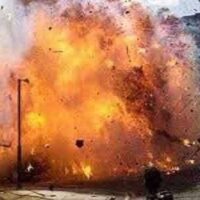
In the northeastern state of Borno State, a series of explosions had struck communities in and around Maiduguri. The blasts reportedly killed at least 30 people and injured hundreds more.
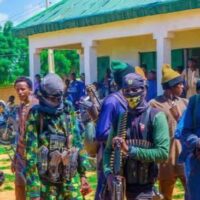
As if that was not enough, Katsina State Government confirmed the killing of 18 persons during an encounter between bandits and members of a vigilante group in Falale and Kadobe villages in Jibia Local
For residents of the two states, the attacks were another painful reminder of the insecurity that has plagued northern Nigeria for years.
And these tragedies were far from isolated.
Nigeria’s Deepening Security Crisis
Since President Tinubu assumed office in 2023, Nigeria has continued to grapple with a complex web of security challenges.
In the North-east, insurgent groups linked to Boko Haram and the Islamic State West Africa Province (ISWAP) remain active. These organisations continue to launch attacks on villages, military installations, and humanitarian facilities.
Communities across Borno, Yobe, and Adamawa states have experienced repeated bombings, ambushes, and kidnappings.
In the North-west, armed bandits have been terrorising rural populations, particularly in states like Zamfara, Kaduna, and Katsina. Entire villages have been raided, with residents forced to pay ransoms for kidnapped family members or flee their homes entirely.
Meanwhile, central Nigeria has witnessed persistent clashes between farming communities and armed groups in states such as Benue and Plateau. These conflicts have resulted in hundreds of deaths and widespread displacement.
Even in the country’s southern regions, criminal networks engaged in oil theft and piracy have undermined economic stability and security.
Across these different regions, the human toll has been immense. Thousands have been killed over the past three years. Millions remain internally displaced.
Families have lost homes, livelihoods, and loved ones.
*A Nation in Distress*
The cumulative impact of these crises is a sense of national exhaustion.
Citizens across Nigeria increasingly question whether the country’s political leadership fully grasps the urgency of their suffering.
In such a climate, images of enthusiastic political supporters gathering in luxury surroundings thousands of miles away can feel profoundly disconnected from the daily struggles of ordinary Nigerians.
To many observers, the scene at Windsor symbolised a troubling gap between governance and reality.
While citizens face economic hardship and security threats at home, political theatrics appear to continue unabated abroad.
*Diplomacy Versus Domestic Reality*
There is no doubt that international diplomacy plays an important role in modern governance.
State visits and meetings with foreign leaders can foster economic partnerships, strengthen security cooperation, and promote cultural exchange. Engagement with the United Kingdom – one of Nigeria’s long-standing partners – can carry strategic value.
But diplomacy must ultimately serve the interests of citizens.
For many Nigerians watching events unfold from afar, the spectacle at Windsor felt less like diplomacy and more like political showmanship.
It reinforced a perception that the priorities of political elites may not align with the urgent needs of the population.
*The Need for National Renewal*
Nigeria today stands at a crossroads. The country possesses immense potential – vast natural resources, a young and energetic population, and a vibrant cultural influence across Africa and beyond.
Yet that potential cannot flourish under conditions of insecurity, economic distress, and institutional weakness. Rescuing Nigeria from its current difficulties will require more than symbolic international engagements. It will require a fundamental recommitment to governance.
*Institutions Must Work Again*
For Nigeria to move forward, all arms of government must begin functioning effectively and independently.
The judiciary must regain public trust by demonstrating impartiality and courage in upholding the rule of law.
The National Assembly must prioritise national interest over partisan advantage, ensuring accountability within the executive branch.
Law enforcement agencies must be strengthened with proper training, equipment, and oversight so they can protect citizens rather than merely respond to crises after they occur.
The police, military, and intelligence services must operate with professionalism and coordination if Nigeria is to defeat insurgency, banditry, and organized crime.
Equally important, transparency and responsible management of public resources must become non-negotiable principles.
*Beyond Symbolism*
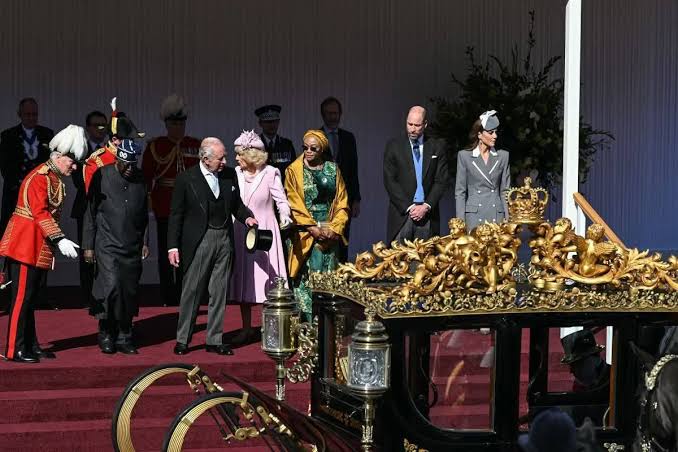
Meetings with foreign leaders and royal hosts may generate headlines, photographs, and diplomatic goodwill.
But they cannot substitute for the difficult work of rebuilding institutions and restoring public confidence at home.
Nigeria’s future will not be determined in the halls of luxury hotels or royal residences abroad.
It will be determined in classrooms, hospitals, courtrooms, farms, and communities across the nation.
*A Moment for Reflection*
The events at Windsor should not simply be dismissed as an isolated embarrassment. Rather, they should serve as a moment of reflection for Nigerians everywhere – politicians and citizens alike.
They highlight the importance of dignity, responsibility, and self-awareness in how a nation presents itself to the world.
Above all, they remind us that national progress requires seriousness of purpose.
Clearly, the disruption at Fairmont Windsor Park was more than a breach of decorum. It was a symbolic collision between two realities: the calm order of a British countryside retreat and the turbulent political culture exported from a nation struggling with deep internal challenges.
For many Nigerians, the spectacle was heartbreaking. It underscored how far the country still has to travel before its immense promise can be fulfilled.
Nigeria does not lack talent, resilience, or ambition. What it requires now is focused leadership and functioning institutions capable of addressing the urgent needs of its people.
Until those foundations are restored, grand international appearances—no matter how prestigious the setting—will do little to deliver the transformation that Nigerians desperately seek. (Credit: THISDAYLIVE)