
By Osita Chijoka

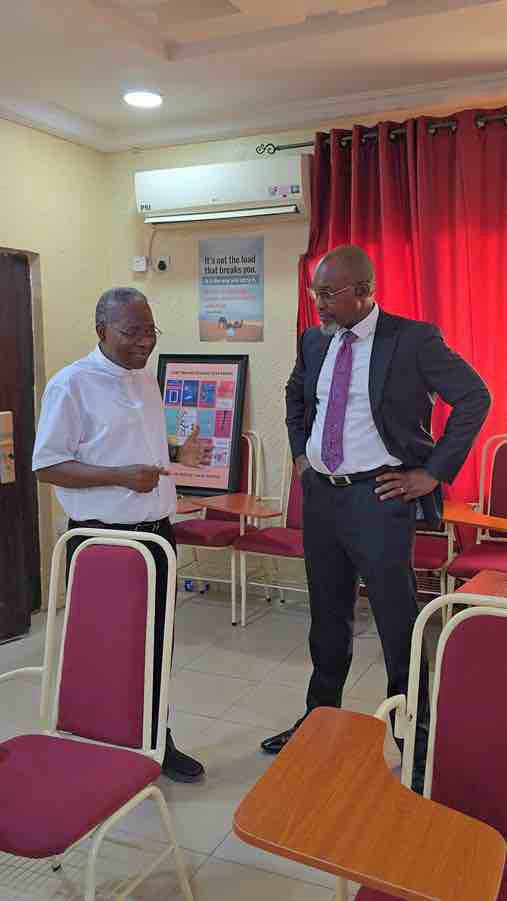
A few days ago, I visited Rev. Fr. George Ehusani at the Lux Terra Leadership Foundation in Abuja. What was meant to be a short meeting stretched into a whole afternoon, because when you sit with Fr. Ehusani, his passion, depth, and wisdom pull you in. I learnt a lot.

Lux Terra’s Psycho-Spiritual Institute is accredited by the NUC to offer postgraduate programmes in Psycho-Spiritual Trauma Healing and Psycho-Spiritual Therapy — the same programmes it already offers in Kenya. They have trained students from 27 African countries. Impressive work.
But Fr. Ehusani shared a painful experience. Their first set of international students arrived in Nigeria in September 2025, only to be told that obtaining a one-year study permit would cost $1,481.06 per student — the same fee imposed on expatriate workers.
For context, in Kenya, student permits cost approximately $75. In most African countries, the prices range between $40 and $110.Nigeria did not have a student visa category on the payment portal. Everyone was classified as an expatriate.
Lux Terra ultimately paid nearly ₦4.5 million for only two Rwandan students, for a single year. They were already considering sending the students back and redirecting future applicants to their Nairobi campus instead.
I was livid. How can a country that imports education massively, spending $1.39 billion (₦2.16 trillion) in just six months of 2025, create barriers against the few international students willing to study here? How can we speak of exporting education when our policies chase students away?
But experience, and my commitment to evidence-based assessment, has taught me to do one thing first: ask questions, not assume.
So I called the Minister of Interior, Dr Olubunmi Tunji-Ojo. He clarified that the charge was a mistake, a result of the newly introduced Expatriate Comprehensive Insurance, which was intended for foreign employees, not students.
The insurance shifts repatriation costs (Nigeria spends over ₦20 billion annually on deportations) from the government to expatriate employers. Students were never meant to be included.
Minutes later, the Minister called back to confirm that the error had been corrected and that student visas were no longer included in the insurance requirement.
I immediately informed Fr. Ehusani and assured him that I would follow up to recover the ₦4.5 million that had already been paid. I celebrate his resilience and his vision to bring more African students to Nigeria. He deserves all our support.
I would also like to thank the Minister of the Interior for his prompt response and prompt correction of the error. Leadership is about listening, and he acted immediately.
However, this incident highlights a deeper national issue. Nigeria urgently needs to export education; it is a low-hanging fruit with a massive multiplier effect.
The numbers tell a disturbing story: According to Nairametrics, Nigerians spent $1.39 billion (₦2.16 trillion) on foreign education in the first half of 2025. That represents a 20% rise in dollar terms and a 38% increase in Naira. Despite the massive 2023 devaluation, this is the highest half-year education spend since 2021.
Meanwhile, the CBN recorded zero income from education exports, meaning no inflow from international students in Nigeria. If we want a modern, competitive economy, we must reverse the trend of all exports and no imports.
I believe it is time to set a national target for the number of international students our public and private universities must attract annually and shape our policies to support that goal.
Education is one of the world’s largest exports. Nigeria cannot afford to stay out of that market.
Osita Chidoka
09 December 2025.
Source: Osita Chijoke Facebook Page.