

By Henry Omoregie

In a bold move amid mounting international scrutiny, the Nigerian government has engaged DCI Group, a Washington-based lobbying and public relations firm, in a $9 million contract to polish the nation’s image abroad.

Signed in December 2025 and revealed in early 2026, the deal tasks the firm with communicating Nigeria’s efforts to protect Nigeria’s mostly rural communities in the areas which experience wanton killings and destruction of the livelihood, and bolster counter-terrorism initiatives against jihadist threats in West Africa.
This development could be seen as good news if it ensures that the facts on the ground are accurately conveyed through our local media channels, rather than through filtered foreign lenses. However, it has sparked fierce debate, with critics labeling it a desperate bid for perception management at a time when domestic realities demand urgent attention.
Reflecting on the evolution of information dissemination, the olden days presented a vastly different landscape for non-nationals seeking news about countries like Nigeria. Back then, sourcing credible information was severely limited by rudimentary technology. Newspapers, telegraphs, and basic radio broadcasts were the primary conduits, often delayed by weeks or months. International correspondents relied on sparse diplomatic cables or infrequent travel, leaving vast gaps in real-time understanding. Propaganda from state-controlled media could dominate narratives with little challenge, as cross-verification was cumbersome and resource-intensive.
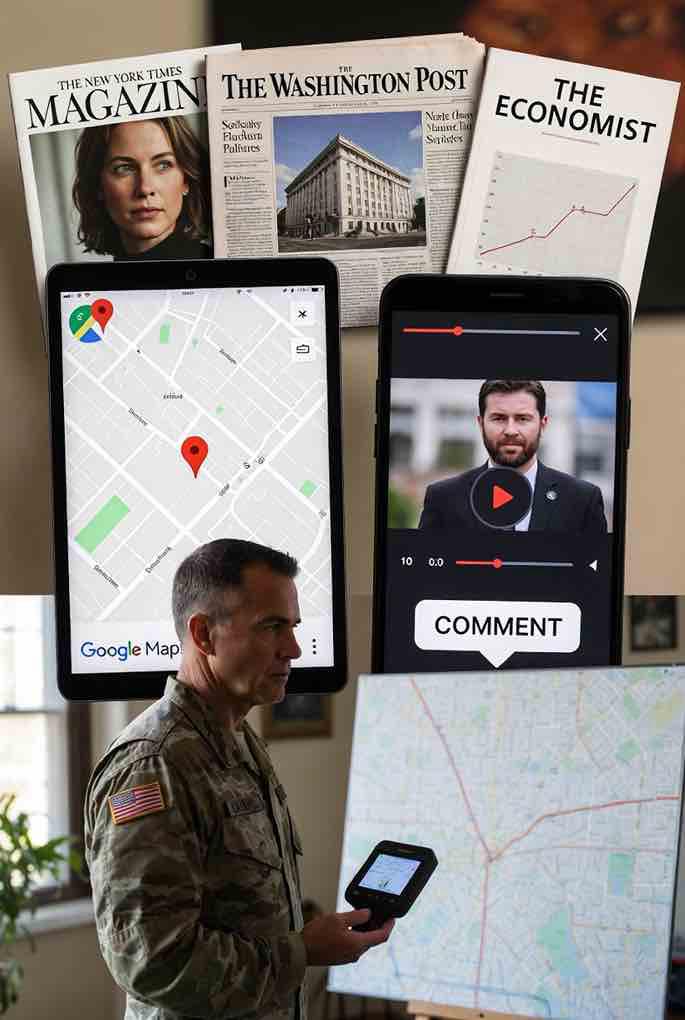
Contrast that with today’s hyper-connected world, where ultra-high-speed internet connections have revolutionized access to information. Dozens of methods now exist to garner news instantaneously: radio persists but is amplified by digital streams; social media platforms like X (formerly Twitter), Facebook, and Instagram allow user-generated content to go viral; cable and satellite TV deliver 24/7 coverage from global networks like CNN and Al Jazeera; emails and newsletters provide curated updates; unsolicited adverts and targeted digital marketing push narratives; the Internet of Things (IoT) integrates data from smart devices for contextual insights.
Beyond these, podcasts offer in-depth analyses on platforms like Spotify; streaming services such as YouTube and Netflix host documentaries; citizen journalism via apps like TikTok captures unfiltered events; AI-powered news aggregators like Google News or Flipboard personalize feeds; virtual reality experiences simulate on-the-ground scenarios; and blockchain-verified reporting ensures authenticity in decentralized media. This multiplicity makes it nearly impossible for any single entity to control the story.
Adding to this arsenal, GPS technologies empower curious news hounds and investigators to confirm the geolocation of events with pinpoint accuracy. Satellite imagery from tools like Google Earth or apps such as What3Words can corroborate claims, exposing discrepancies in official accounts. For instance, reports of insecurity or human rights issues can be verified by mapping coordinates, timestamps, and eyewitness uploads, rendering denials ineffective.
Moreover, surveys, opinion polls, and phone-in programs on radio, TV, and online forums unearth the deep-seated feelings of ordinary Nigerians. These platforms reveal sentiments on governance, economy, and social issues that no PR firm can easily whitewash or explain away. The Nigerian Institute of Public Relations (NIPR) itself defends such engagements as legitimate but emphasizes that true reputation stems from domestic realities, not elite-driven narratives.
I suggest that both the Nigerian government and its people confront the truth headlong. Instead of outsourcing image repair, we must focus on unvarnished facts, no matter how painful, and endeavor to eradicate detrimental behaviors from our daily lives. Denying unpleasant events is foolish when anyone with a smartphone GPS app can confirm details at the touch of a button—be it kidnappings, communal clashes, or economic hardships. Such transparency builds credibility far more than any lobbying dollars.
The NOA must liaise with state and LGA branches to sample opinions about security and well-being of the people in monthly townhall meetings with security stakeholders in attendance.
At all three levels of governance – federal, state, and local – leadership and followership must gaze into the mirror and initiate attitude change processes. As the Bible metaphorically urges, we should first remove the motes from our own eyes before critiquing others. This means addressing corruption, inefficiency, and insecurity through genuine reforms, not mind-altering propaganda. One of the opposition parties echoes this, calling the contract “defective and deceptive,” arguing that no foreign firm can salvage Nigeria’s image without internal improvements.
Hosting more international events, as suggested by a former Minister, Babatunde Fashola, could showcase our strengths organically. If people cannot travel to any part of the country in peace on good roads and without incessant fears of abduction or robbery, it will be evident during daily news reporting and radio and TV phone-in programs. It is impossible to report white as black these days. It is impossible to deny abductions these days (for instance) when all sorts of verifiable media sources show otherwise.
Ultimately, sustainable progress lies in collective self-reflection and action. By prioritizing truth and behavioral shifts, Nigeria can forge a reputation that withstands global scrutiny, rendering expensive PR firms redundant. The financial commitment to the foreign PR could better fund local initiatives, proving that authenticity trumps artifice every time.
Henry Omoregie is a Media Psychology Researcher and Public Affairs Commentator and he wrote from Benin City, Edo State.