
Written by Henry Omoregie

December 11, 2025

The story of the Danfo bus is the story of Lagos itself—a tale of imported machinery, indomitable spirit, and urban adaptation. Long before its signature yellow and black stripes became a blur on the city’s roads, the Danfo began its life an ocean away. Its origin is the German-made Volkswagen Kombi, a versatile van designed in Wolfsburg and imported into Nigeria through the channels of international trade. In the early 1960s, when Lagos served as the federal capital, this sturdy Volkswagen van became the city’s primary workhorse of public transit. Its durable engineering and functional design made it ideal for the burgeoning metropolis.
It was the Lagosian populace who truly defined it, christening it with a name that captured the essence of their existence. “Danfo,” derived from the Yoruba language, conveys speed, urgency, and action performed with agility. This was not merely a description of the bus’s movement but a reflection of the city’s heartbeat. The buses were designed to move swiftly, often navigating the chaotic streets with such relentless momentum that a full stop at a bus stop was sometimes a luxury. Passengers had to master the art of the quick hop-on, a skill as essential to city life as the daily hustle itself.
Lagos, the epitome of the Nigerian dream, attracted a flood of people from every corner of the country in those post-independence years. They came seeking opportunity, bringing with them a mosaic of cultures and an unwavering drive that would later be encapsulated as the “Naija spirit.” The Volkswagen van, particularly the iconic Type 2 (or VW Bus), became the mobile hallmark of this era—a German design ferrying Nigerian aspirations. For Lagosians, the city was and remains a land of possibility, where daily survival is an active verb. This was mirrored in the very acquisition of these buses; many in the 1990s were purchased through arduous hire-purchase agreements, a testament to the drivers’ own grit and determination to claim a piece of the entrepreneurial ladder.
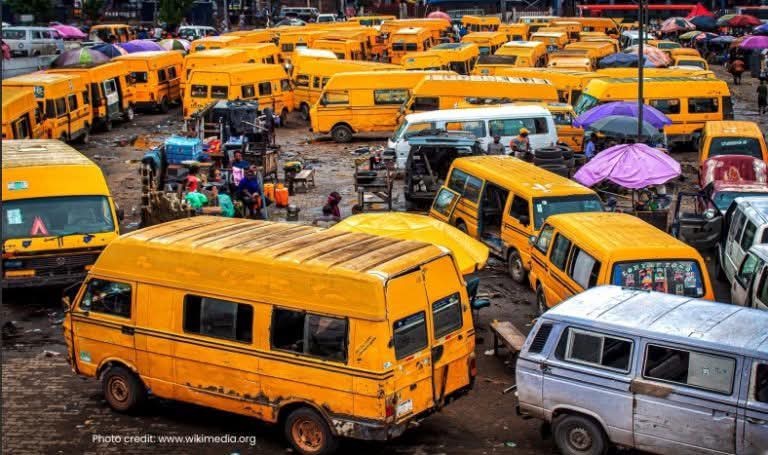
As decades passed, “Danfo” evolved from a term into a full-blown social subculture, a cultural phrase signifying the pace, struggle, and resourcefulness of Lagos. The original German Kombi provided the blueprint, but Lagosians became the engineers of their own transit reality. The bus shed its imported uniformity and was radically reimagined. Different vehicle brands and models, often initially intended for cargo, were repurposed. Local welders and carpenters fitted them with makeshift benches of wood and metal. More generous owners might add thin upholstery for a semblance of comfort. The defining yellow paint with black stripes was applied, creating a uniform identity for a deeply non-uniform fleet.
These adaptations were born of sheer necessity. Many donor vehicles were not designed for passenger use, leading to further modifications like side windows cut and fitted with sliding panels to allow for air in the cramped interior. The generic form evolved into what is often a Volkswagen Vanagon or its various analogues, but the soul of the vehicle is entirely Nigerian. Thus, the Danfo is a unique hybrid: conceived in Germany, but culturally engineered in the frenetic workshops and on the sun-baked roads of Lagos.
This spirit of improvisation extends beyond the vehicle’s construction to its very use. During rush hours, when buses on certain routes are scarce, the struggle to secure a seat escalates into a performance of sheer physical ingenuity. Some passengers, particularly the younger and more agile, indulge in unconventional means of boarding.
When the main sliding doorway becomes a choked bottleneck of competing commuters, alternative entries are exploited. One common method involves darting to the rear of the bus, opening the boot, and climbing in to squeeze into one of the back seats. Another bold tactic sees passengers pulling themselves through the driver’s door, climbing past the driver’s seat to access the main compartment. These acts are not mere mischief; they are calculated maneuvers in the urban calculus of survival, a desperate ballet performed to avoid being left behind.
The Danfo, therefore, is far more than a bus. It is a rolling symbol of Lagosian resilience. From its German automotive origins to its Nigerian cultural baptism, every rattle of its chassis, every shout of the conductor, and every daring leap onto its footboard tells a story. It is a story of making something your own, of adapting tools to need, and of a city that moves too fast to wait for perfect conditions. The Danfo is Lagos: relentless, resourceful, and forever in motion.
Credit: Henry Omoregie 2025