

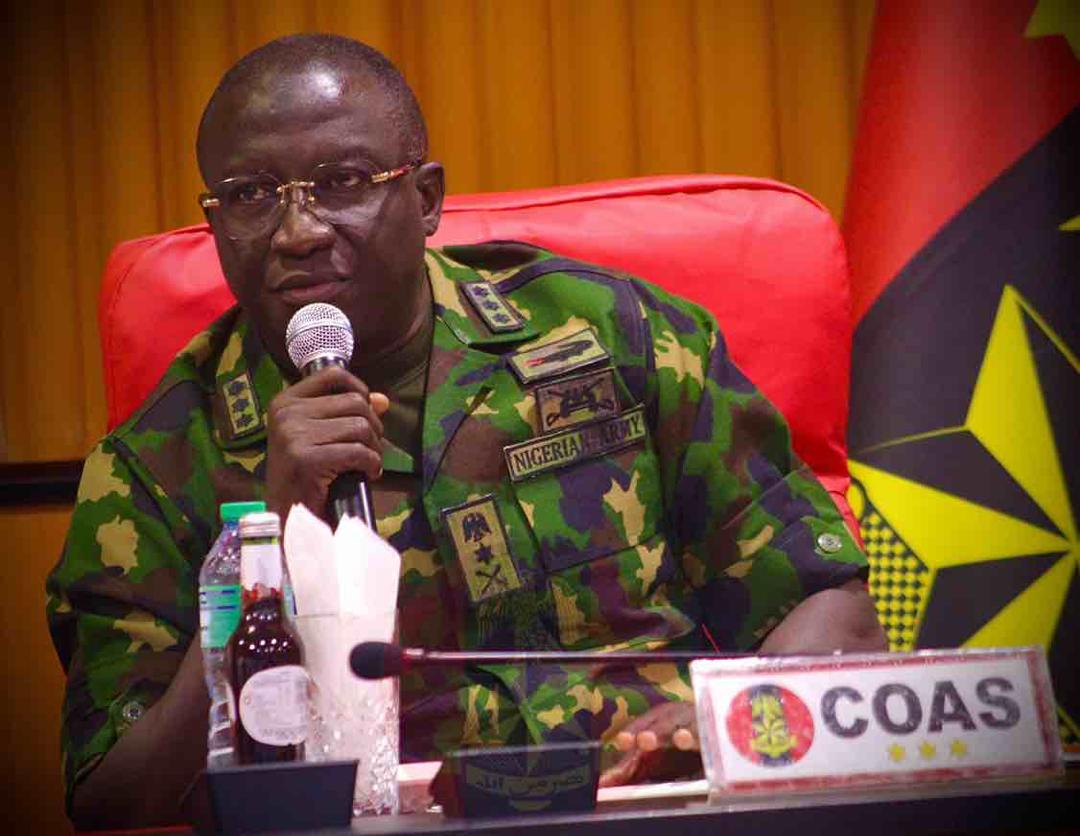
By Chidi Omeje

When Lieutenant General Waidi Shaibu assumed office as Chief of Army Staff (COAS) on 24 October 2025, expectations were high. Nigeria’s security landscape remained complex, defined by terrorism in the North East, banditry and kidnapping in the North West and North Central, separatist agitations in the South East, and emerging threats linked to transnational crime.

One hundred days on, his tenure is beginning to reveal both direction and intent, offering early insights into his leadership philosophy and strategic priorities for the Nigerian Army. Although 100 days is widely regarded as too short a period for sweeping institutional transformation, it remains a useful benchmark for assessing tone-setting decisions, operational focus, and command posture. In this regard, Gen Shaibu’s first months in office have been marked by a clear emphasis on sustained offensive operations, operational coherence, and renewed attention to professionalism and troop morale.
Perhaps the most visible feature of Gen Shaibu’s early tenure has been the sustained tempo of military operations across multiple theatres. Under his command, formations and units have intensified coordinated offensives against terrorist and bandit groups, particularly in the North East, North West and North Central regions. Operations conducted by troops of the Nigerian Army under frameworks such as Operation FANSAN YAMMA, Operation Hadin Kai, and other joint task force arrangements have recorded notable successes, including the disruption of terrorist enclaves, neutralisation of high-value targets, recovery of arms and ammunition, and rescue of kidnapped victims.
These operations reflect a continuation, and in some cases escalation, of pressure on non-state armed groups, with an apparent focus on denying them freedom of movement, logistics corridors, and safe havens. Military sources indicate that the COAS has encouraged aggressive exploitation following initial contacts, ensuring that gains are consolidated rather than abandoned after first engagements. This approach aligns with a broader counter-insurgency principle of sustained presence and denial of space to adversaries.
Beyond battlefield outcomes, Gen Shaibu’s early signals suggest a strong emphasis on professionalism and discipline within the ranks. In his interactions with senior commanders and field formations, he has reportedly stressed adherence to rules of engagement, respect for human rights, and the importance of maintaining public trust in military operations.
This focus is particularly significant in an era where military operations are closely scrutinised by civil society, the media, and international partners. By reinforcing ethical conduct alongside kinetic operations, the Army leadership appears keen to balance operational effectiveness with legitimacy, an essential component of long-term internal security operations.
The COAS has also underscored the importance of intelligence-driven operations, recognising that accurate, timely intelligence remains critical in countering asymmetric threats. This has translated into closer collaboration with other security agencies and encouragement of community-based intelligence efforts, especially in areas prone to banditry and kidnapping.
Another recurring theme in Gen Shaibu’s first 100 days is attention to troop welfare and morale. Military analysts note that operational success is closely tied to the motivation and wellbeing of personnel, particularly those deployed in high-risk environments for extended periods. Within the period under review, there have been indications of renewed emphasis on welfare matters, including medical support, rotation of troops, and provision of operational logistics. While structural welfare challenges within the military cannot be resolved within 100 days, early signals from the Army hierarchy suggest that the issue remains firmly on the leadership agenda.
The COAS’s engagement with frontline troops during operational visits has also been interpreted as a morale-boosting measure which reinforces confidence and demonstrates leadership presence at critical theatres of operation.
General Waidi Shaibu’s early tenure has been distinguished by deliberate and sustained efforts to strengthen civil–military relations across the country. Under his leadership, the Nigerian Army has placed renewed emphasis on close cooperation with civil authorities at the federal, state, and local levels, with an understanding that effective security operations are most successful when aligned with governance structures and civilian oversight.
Beyond formal government institutions, the Army has also deepened engagement with traditional rulers, community leaders, and other grassroots stakeholders in areas affected by insecurity. These engagements have served as vital platforms for intelligence sharing, conflict de-escalation, and trust-building between troops and host communities. By leveraging the influence and local knowledge of traditional institutions, the Army has been better positioned to understand community dynamics, address grievances, and counter misinformation that often fuels tension during military operations.
Furthermore, General Shaibu has always emphasized to the commanders and troops, the importance of winning the confidence of the local population as a strategic imperative, not merely a humanitarian consideration. Through community outreach initiatives, coordinated humanitarian support, and improved troop conduct standards, the Nigerian Army has sought to project itself as a partner in peace rather than a distant force. This people-centred approach reflects an appreciation of the fact that sustainable security can only be achieved when local communities see the military as an ally in restoring normalcy, protecting livelihoods, and rebuilding social stability. As far as Gen Shaibu is concerned, rescue operations involving kidnapped civilians, particularly women and children, are both operational and humanitarian successes. For him, such outcomes not only weaken criminal networks but also help rebuild public confidence in the state’s ability to protect citizens.
The Nigerian Army’s strategic communication during this period has also been notable, with timely updates on operations aimed at keeping the public informed while countering misinformation. In an age where perception can be as influential as battlefield outcomes, this approach which is being championed by the Directorate of Army Public Relations and supported by the COAS, reflects an understanding of modern conflict dynamics.
Security challenges in Nigeria are increasingly multidimensional, requiring close coordination among military, intelligence, and law enforcement agencies. In his first 100 days, Gen Shaibu has operated within existing joint frameworks while encouraging synergy among stakeholders. Joint operations involving the Army, Air Force, Navy, and other security agencies have continued, thereby reinforcing the whole-of-government approach to internal security. Analysts argue that sustaining and improving this coordination will be crucial as threats become more adaptive and transnational.
Despite early gains, significant challenges remain. Terrorist and bandit groups continue to demonstrate resilience, exploiting difficult terrain, socio-economic vulnerabilities, and cross-border networks. Addressing these challenges will require not only sustained military pressure but also broader governance, development, and justice interventions.
Moreover, expectations surrounding military reform, equipment modernisation, and welfare improvements will test the Army leadership in the months ahead. The ability of the COAS to translate early operational momentum into lasting strategic outcomes will be a key measure of success. While it is too early for definitive judgments, the initial indicators suggest a command focused on consolidating gains, sustaining pressure on adversaries, and repositioning the Nigerian Army to confront evolving security threats.
As Nigeria’s security environment remains fluid and demanding, the coming months will reveal how these early priorities mature into long-term strategies. For now, the first 100 days provide a measured basis for cautious optimism and a clearer understanding of the direction under Gen Shaibu’s leadership.
Chidi Omeje is the publisher of Security Digest (www.securitydigestng.com)