
By Olu Adekunle
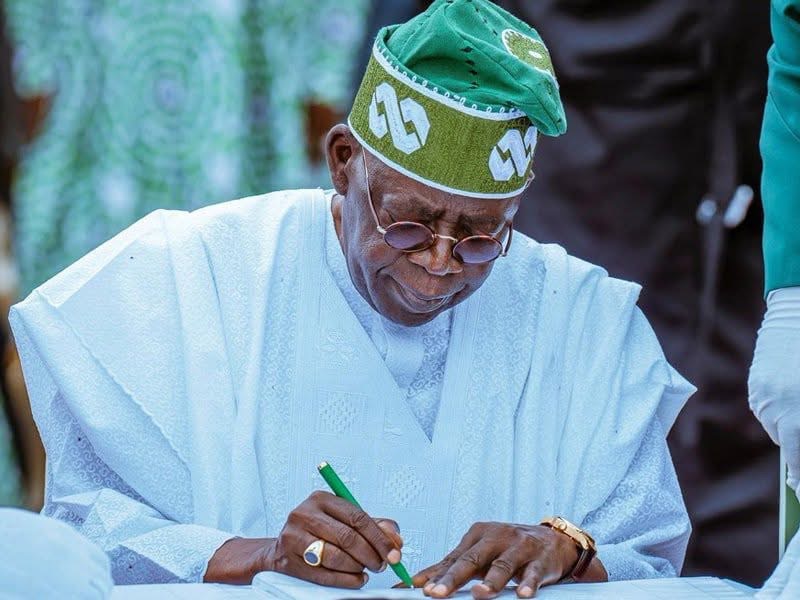
President Bola Ahmed Tinubu told Plateau leaders on Wednesday, April 29, 2026: “If we have to borrow, we borrow. Borrowing is not leprosy. We just have to work hard to be able to pay for it.”
He said it days after the Senate approved a fresh $516.3 million loan from Deutsche Bank for the Sokoto–Badagry Superhighway.
The metaphor is vivid at best. Leprosy isolates. It scars and it signals decay. By saying debt is not leprosy, the President implies borrowing is clean, normal, even healthy. Nigerians are right to call that arrogant and insensitive. Because while borrowing isn’t leprosy, poverty is and Nigeria’s borrowing is manufacturing poverty at an industrial scale and Is all but borrowing Itself Into a debt trap
As of December 31, 2025, Nigeria’s total public debt stood at N159.28 trillion, up N14.61 trillion in one year. In dollar terms, it rose from $94.23 billion to $110.97 billion.

That is N159 trillion for a country where 63% of citizens or roughly about 140 million people live below the poverty line. The World Bank itself confirmed poverty rose from 56% in 2023 to 61% in 2024, then 63% in 2025, despite inflation easing from 34.80% to 15.15%.
The President says we’ll work hard to pay. But the question that begs an answer is, with what?
Debt service consumed 69% of Federal Government revenue in 2024. Out of N19.354 trillion earned, N11.887 trillion went into debt payments alone. From January–September 2024, debt servicing gulped 61% of revenue. That easily translates to 61 kobo of every N1 collected.
Afreximbank projected Nigeria’s debt service-to-revenue ratio at 110.4% in 2024 — meaning we would need to borrow just to pay interest. The President himself admitted in November 2024 that when he took office, Nigeria was servicing debt with 97% of revenue. Even at 65–69% today, the World Bank and IMF recommend 30–40% for developing economies. At 65–69%, “nearly N7 out of every N10 earned is used to service debt, leaving very little fiscal space for any meaningful development spending. This is not abstract. Debt service-to-revenue ratio remains elevated while fiscal space is near totally constrained. The simple translation is, no money for schools, hospitals, or roads unless we borrow more. At the end of the day, all the so called productive borrowing Isn’t producing Nigerians.
The President’s defense is that loans fund infrastructure: “Borrowing is a common global practice… to build infrastructure”. The Sokoto–Badagry Superhighway is cited as being aimed to boost trade, food security, national integration but where is the impact?
Since May 29, 2023, Tinubu removed fuel subsidy and floated the naira. The result: fuel prices higher, increased transportation costs nationwide, food prices surged and the list goes on and on. Soaring food prices now consume roughly 80% of an average worker’s monthly income. To lay the issue bare, NLC aptly described the current situation as “the most severe survival crisis in the nation’s history, surpassing the hardships of previous austerity measures and even the civil war.
GDP grew 3.87% in 2025. Yet poverty levels are projected to reach 62% or 140 plus million people in 2026. The much touted growth that had the likes of Daniel Bwala and Reno Omokri prancing with glee all over the social media has done little to reverse the squeeze on living standards.
If we’re borrowing for development, why are 139 million Nigerians still living in poverty in 2026? Why did the World Bank say “poverty has yet to begin declining” despite easing inflation? The answer isn’t far fetched. It is because debt is financing debt, not people.
In Q1–Q3 2024, N4.39 trillion was used for domestic debt servicing and N4.55 trillion for external debt servicing. Interest on Ways and Means alone was N3.05 trillion. Meanwhile, external reserves hit $50 billion… The highest in 13 years but Nigerians can’t eat reserves.
The Leprosy Analogy by President Tinubu is cruel, historically Illiterate, arrogant and speaks clearly of his lack of empathy for the suffering masses.
Leprosy is a disease that isolates victims by law. In biblical times, lepers were mandated to shout “unclean” as they shamefully moved about and lived outside the camp. The President used it to say debt isn’t shameful. Unfortunately, he is so detached from the current realities and cannot comprehend that Nigerians feel the shame daily. Everyday has becomes a survival struggle as workers slide deeper into poverty against the backdrop of fuel subsidy removal, Naira depreciation, and inflation which erase any form of wage gains. To tell people living that reality that borrowing isn’t leprosy is to misdiagnose the disease. The disease is governance without accountability.
The President says “we just have to work hard to be able to pay”. But who is “we”? Surely not the political class. In 2024, domestic debt service rose 47.56% year-on-year to N6.32 trillion, driven by Treasury bills interest payments up 385.43% to N1.81 trillion.
Banks profit. Politicians borrow. Sadly, it is the citizens that pay and they pay twice: first through inflation and subsidy removal, then through taxes to service loans they never approved. The removal of fuel subsidies worsened the situation and low-income households, rural dwellers, and civil servants were left to bare the brunt with virtually no social safety nets in place. Yet the government approved over $21 billion external borrowing in July 2025 and another $516.3 million this week.
Borrowing without impactful Reform is just addiction and every addict says they can quit. Every government says debt is “for infrastructure.” But Nigeria’s debt-to-GDP ratio was 16.7% in 2017 and was forecast at 40.3% in 2024. Debt-to-export ratio hit 235.7% in 2020 as a result of heavy reliance on external borrowing compared to export earnings.
The DMO a while back insisted that our debt is within sustainable limits but sustainable for whom? Not for the 80% of workers’ income eaten by food. And surely not for the 140 million Nigerians in poverty and economic bondage.
The President says debt is normal: “many countries rely on debt to finance development projects”. True. But those countries don’t spend 97% of revenue on debt service. They don’t have debt-to-revenue projected at 110.4%. They don’t borrow to pay interest on old loans… the definition of a debt trap.
Rather than borrowing is not leprosy, I think it would have been more refined for Nigerians to hear:
1. A moratorium on non-concessional loans until debt service-to-revenue is below 40%.
2. Full audit of all loans since 2015 — where did the money go? The Sokoto–Badagry highway is not the first “legacy project.
3. Legally binding cap on debt service — not more than 30% of revenue, as IMF recommends.
4. Cut cost of governance before cutting citizens’ throats. N8.93 trillion for debt service in 9 months is more than health, education and defense combined. Shocking isn’t it?
Borrowing isn’t leprosy but the legendary display of indifference by this APC government is.
It is leprous to watch 63% of your people in poverty and call more loans “necessary.” It is leprous to celebrate $50 billion reserves while workers can’t afford food. It is leprous to say “we just have to work hard to pay” when the people working hardest are the ones being buried by your policies.
Mr. President, Nigerians don’t fear borrowing. They fear you. They fear a government that borrows in their name, spends in its interest, and sends them the bill.
Debt may not be leprosy. But at 69% of revenue, it is gangrene. And if you don’t amputate profligacy now, the whole country will be cut off.
Olu Adekunle is a Public Policy Analyst and he writes from Abuja