

By Joan Osa Oviawe, PhD

Across Edo State, the years of Governor Godwin Obaseki’s administration marked a decisive transformation in public education. The EdoBEST 2.0 reform strengthened teaching quality, accountability, and public confidence in schools.

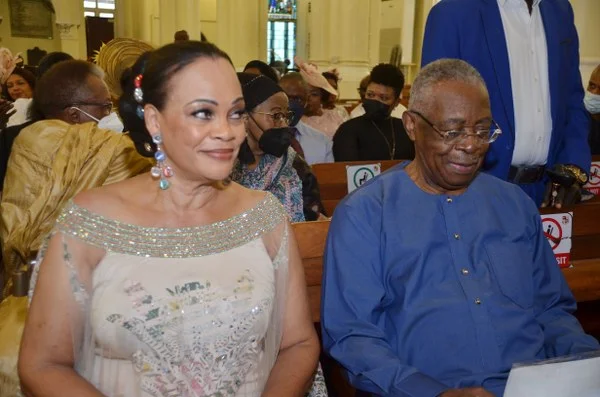
One of its most remarkable outcomes is the revitalization of Itohan Girls Grammar School, made possible through the generosity of Senator Daisy Danjuma and her husband, Gen. TY Danjuma (Rtd).
The Danjumas’ investment of over ₦1 billion in the renovation and expansion of the school reflects both a deep personal commitment and a powerful legacy of service. It continues the Ehanire family’s long-standing contribution to education in Edo State. Senator Danjuma’s father, Chief Ighodaro Ehanire, was a pioneering educationist who founded Edugie Secondary School in 1958. The school was later renamed Itohan Girls Grammar School in 1965 in honor of his sister, Mrs. Itohan Ehanire Rotimi, a devoted teacher who taught at both Itohan Girls and Imaguero Girls Secondary School. Mrs. Rotimi was widely remembered for her discipline, compassion, and dedication to young girls’ learning.
During the Nigerian civil war, Chief Ehanire and his family sheltered and protected non-indigene female teachers and students in Benin City, leaving behind a legacy of courage and humanity that continues to inspire.
In a conversation I had with Senator Daisy Danjuma, she reflected on how deeply personal this project was for her. When she visited the school, she saw firsthand the improvements already underway through EdoBEST 2.0. The restored discipline among students, improved learning outcomes, and efforts to address the decades-long erosion problem that had threatened the grounds deeply impressed her. What she witnessed moved her to act, transforming family memory into public legacy.
Even before the renovation, Itohan Girls Grammar School had become one of the most sought-after government schools in Benin City. This was a direct outcome of the EdoBEST 2.0 reforms that elevated teaching, learning, and school culture across the state. One message I received from a parent in 2023 captured this shift in public perception.
WhatsApp Message – Itohan Girls Grammar School Admission
Elder Kingsley (last name redacted) (Fri, 8 Sep 2023, 4:02 PM):
“Good evening my amiable commissioner.
I’m thanking God for his using you to achieve in the educational sector. My amiable commissioner, based on your transformation in the educational sector, I’m withdrawing my daughter from a private school to a public school.
We’ve went to ITOHAN Girls Secondary School for the admission and they’re telling me what I don’t understand. They said I should come after the school’s resumption and I don’t want to be denied the admission because that was what happened the last session when I went to Idia College. That is why I’m asking for your assistance for the admission cause we just relocated to Sapele Road.
I believe God will use you for my good. Thanks for your understanding.”
I had never met this parent before. However, because my phone number was publicly available to teachers, parents, and the general public, messages like this were not uncommon. They reflected the growing public confidence in Edo’s education system. Government schools that were once avoided were now oversubscribed because of the visible gains achieved through EdoBEST 2.0. With Itohan Girls Grammar School now fully modernized, one can only imagine how much greater the demand will become. It is therefore important that the school and its School Management Board continue to uphold quality while remaining favorably disposed to access, ensuring that excellence and inclusion grow together.
Under Governor Obaseki’s leadership, more than 250 distinguished Edo sons and daughters, along with several non-Edo volunteers, were inaugurated in 2022 as members of School Management Boards (SMBs) across rural and urban secondary and TVET schools in the state to improve school oversight and strengthen governance. They represented a diverse cross-section of professionals united by the goal of advancing public education.
Among them were Mr. Asue Ighodalo, Esq. (Idia College), Senator Ehigie Uzamere and Engr. Chris Ogiemwonyi (Western Boys), Mrs. Adesuwa Oyenokwe (Idia College), Mr. Mike Osime (Irrua Technical College), Chief Dan Orbih (Ogbona Secondary School), Gen. Cecil Esekhaigbe (Rtd) (ACC), and Mr. Jefferson Uwoghiren, Esq. (Niger College).
Former Governor Lucky Igbinedion supported Edo College, while diaspora professionals such as Mrs. Joan Egwuonwu, a Senior Policy Analyst with the Canadian Government, led major school improvements in Ogbona Secondary School in Etsako Central LGA. Members of the State Executive Council, including the then Attorney General and Commissioner for Justice, Mr. Wole Iyamu, SAN (Edo College SMB), also volunteered to serve on the School Management Boards of various government secondary schools in the state.
While the government maintained a focus on improving learning outcomes, it also worked tirelessly to address the large inventory of dilapidated schools inherited from past administrations. This ensured that the reform process prioritized both academic quality and infrastructural renewal.
The successes of EdoBEST 2.0 inspired many others to give back. Alumni associations, including several in the diaspora, mobilized impressive resources. The ACC Irrua Alumni Association (ACCIOBA), led by Dr. Ohens in California, raised over ₦3.5billion to revive their alma mater. Similarly, alumni of Benin Technical College contributed significantly to upgrading facilities and providing modern equipment to support technical and vocational learning.
The renovation of Itohan Girls Grammar School began during Governor Obaseki’s administration and was completed after he left office, underscoring the importance of continuity in governance across political transitions. It demonstrates how reforms anchored in institutional strength can outlive political cycles and remain focused on service delivery.
As Edo transitions to a new administration, it is crucial that these gains are consolidated and expanded. The government must continue to open opportunities for citizens, alumni, and corporate organizations to contribute meaningfully to education. Sustained progress depends on continuity, collaboration, and the shared belief that every child deserves access to quality learning in a safe and supportive environment.
The renovation of Itohan Girls Grammar School by Senator Daisy and Gen. TY Danjuma (Rtd) stands as a shining example of what is possible when vision and compassion come together. Their generosity honors a family legacy rooted in education, uplifts a new generation of Edo girls, and reminds us that meaningful reform endures when citizens and government work together for the common good.
A promise was made.
A promise was kept.
Dr. Joan Osa Oviawe is the immediate past Commissioner of Education of Edo State (2021-2024).