
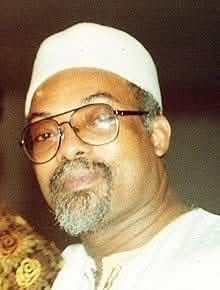
In the early 1960s, Lindsay Barrett, the Jamaican-born writer, broadcaster, photographer, and cultural activist, stood at a crossroads familiar to many African-descended intellectuals of his generation. Living in London at the time, Barrett was deeply engaged with African and Black consciousness from afar, yet circumstances and chance encounters soon compelled him to rethink where his voice truly belonged.

That turning point came through two towering figures of Nigerian literature: John Pepper Clark and Wole Soyinka.

A Challenge from Nigerian Literary Giants
While still in London, Barrett met the renowned Nigerian poet J. P. Clark, who made a remark that would linger in his mind. Clark told him plainly that he looked like someone who belonged in Lagos, not Europe. The comment was less about geography and more about cultural responsibility at a time when Africa was asserting its postcolonial identity.
Around the same period, playwright, activist, and future Nobel laureate Wole Soyinka confronted Barrett more directly. Soyinka accused him of pontificating about Africa from a distance, challenging the legitimacy of theorising African realities while remaining physically removed from the continent. According to Barrett’s recollection, Soyinka told him that if he came to Nigeria, meaningful work would be found for him. At the time, Soyinka was on the verge of being appointed Head of Drama at the University of Ibadan, one of Africa’s most vibrant intellectual centres.
Arrival in Ibadan and the Mbari Artists’ Club
Barrett accepted the challenge and moved to Ibadan, a city that in the 1960s pulsed with literary, artistic, and political energy. There, he was entrusted with running the Mbari Artists’ and Writers’ Club, an influential cultural hub that brought together writers, dramatists, visual artists, and musicians from across Africa and the diaspora.
Mbari was not merely a social space; it was a crucible for new African artistic expression. Managing the club immersed Barrett in a community that included some of the most significant voices of modern African literature and art. Captivated by the intellectual atmosphere of the university town and the creative excitement surrounding Mbari, Barrett applied for an extension of his stay in Nigeria, which was granted.
Broadcasting, Teaching, and Cultural Work
Barrett’s engagement with Nigeria soon expanded beyond Mbari. He secured a three-month engagement with the Voice of America (VOA) on its Africa Abroad programme, where he prepared and read profiles of African writers for international audiences. This work positioned him as an important cultural mediator between Africa and the wider world.
Alongside journalism, Barrett became deeply involved in radio drama, television arts coverage, and cultural broadcasting. For a period, he also served as a guest lecturer in Afro-American literature at the University of Ibadan, contributing to academic discourse on Black and African diasporic writing at a time when such studies were still emerging.
A Life Rooted in Nigeria
What began as a challenge evolved into a lifelong commitment. Barrett chose to remain in Nigeria, where he continued to teach, broadcast, photograph, and write. His work chronicled African cultural life from within rather than from a distance, fulfilling the call issued years earlier by Clark and Soyinka.
Through decades of residence and creative output, Lindsay Barrett became an integral part of Nigeria’s cultural and intellectual landscape, embodying the Pan-African ideal of lived solidarity rather than distant commentary.
Source: Koko Kalango, One Love